
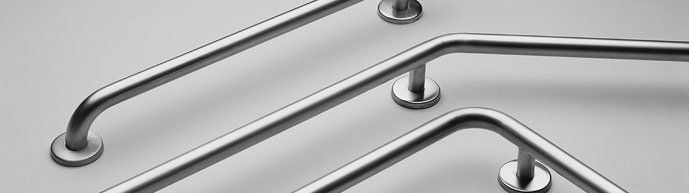
Grab rails are indispensable safety features in bathrooms, providing crucial support and stability, especially for the elderly or individuals with mobility challenges. However, their effectiveness and safety are entirely dependent on proper installation.
While many factors contribute to a successful grab rail installation, two requirements stand out as absolutely essential: secure mounting to structural elements and adherence to proper placement and height guidelines. Neglecting either of these can render the grab rail ineffective or, worse, create a significant safety hazard.
1. Secure Mounting to Structural Elements
The paramount requirement for any grab rail installation is that it must be securely anchored to a structural element of the wall. This means attaching the grab bar directly to wall studs, blocking, or using heavy-duty anchors specifically designed for the wall material and the weight the grab bar is intended to support. Failure to do so can result in the grab bar pulling away from the wall under pressure, leading to a fall and serious injury.
- Locating Wall Studs: Wall studs are the vertical framing members within the walls that provide structural support. They are the ideal anchor points for grab bars. Installers must use a reliable stud finder to accurately locate these studs before drilling. Marking the center of the stud ensures the strongest possible attachment.
- Using Blocking or Backing: In areas where studs are not conveniently located (e.g., between studs), it is often necessary to install horizontal blocking or backing within the wall cavity. This involves opening the wall, installing sturdy wood or metal supports between the studs, and then patching the wall. This provides a solid surface to which the grab bar can be securely fastened .
- Appropriate Anchors for Wall Material: Not all walls are the same. The type of anchor used must be suitable for the wall material (e.g., drywall, tile, plaster, concrete). For hollow walls, toggle bolts or winged anchors that expand behind the wall surface are often required. For solid masonry or concrete, specialized masonry anchors are necessary. Suction cup grab bars, while seemingly convenient, are notconsidered secure and should never be relied upon for weight-bearing support due to their high risk of sudden detachment .
- Weight-Bearing Capacity: A properly installed grab bar should be able to support a significant amount of weight, typically at least 250 pounds (113 kg), as required by ADA standards [4]. This capacity is only achievable when the grab bar is firmly attached to a robust structural element.
2. Adherence to Proper Placement and Height Guidelines
Even a securely mounted grab rail is ineffective if it is not placed in an optimal location and at the correct height for the user. Accessibility standards, such as those set by the Americans with Disabilities Act (ADA), provide crucial guidelines for placement and height to ensure maximum usability and safety .
- Strategic Placement: The location of grab bars should be determined by the specific needs of the user and the layout of the bathroom. Common areas for grab bar installation include:
- Beside the Toilet: To assist with sitting down and standing up. ADA guidelines specify exact lengths and positions for grab bars behind and on the side wall of a toilet .
- Inside the Shower or Bathtub: To provide support when entering, exiting, and maneuvering in wet, slippery conditions. Horizontal grab bars are typically placed on the back wall and control wall, while vertical bars can aid in stepping over the tub edge .
- Near the Sink: For support while standing or transferring.
- Correct Height: The height of the grab bar from the finished floor is critical for comfortable and effective use. ADA standards generally require grab bars to be installed horizontally between 33 and 36 inches (840 to 915 mm) above the finished floor . This range accommodates most adult users and allows for a natural grip.
- Shower/Bathtub Specifics: In a shower or bathtub, the horizontal grab bars should also fall within this height range. For bathtubs, there are often specific requirements for the lower grab bar (e.g., 8-10 inches from the rim) and the upper grab bar (33-36 inches from the floor) .
- Consideration of User Needs: While ADA guidelines provide a universal standard, it’s important to consider the specific height and mobility limitations of the primary user. Sometimes, slight adjustments within or outside the standard range may be necessary to optimize the grab bar’s effectiveness for an individual.
Conclusion
When installing grab rails in a bathroom, two requirements are non-negotiable for ensuring safety and functionality: secure mounting to structural elements and adherence to proper placement and height guidelines. Secure mounting guarantees that the grab bar can withstand the necessary weight and pressure without failing, preventing dangerous falls. This involves accurately locating wall studs, using appropriate blocking, and selecting the correct anchors for the wall material. Simultaneously, correct placement and height, often guided by accessibility standards like ADA, ensure that the grab bar is easily accessible and provides effective support for the user. By meticulously addressing these two critical requirements, installers can create a bathroom environment that truly enhances safety, promotes independence, and provides peace of mind for all users.
